
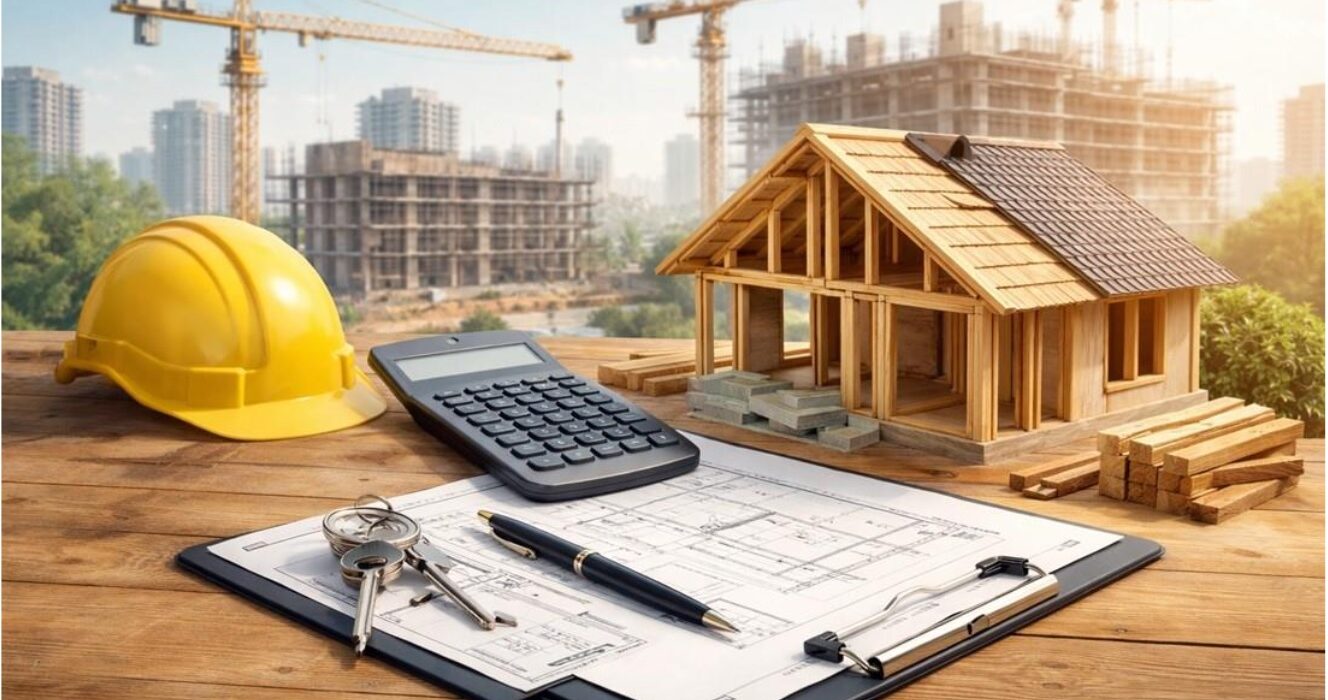
A construction loan is a type of finance package designed specifically for building or renovations. Unlike a standard home loan where the lender usually provides the full loan amount at settlement a construction loan is typically released in stages, as building work is completed. These staged releases are often called progress payments or progressive drawdowns.
For most clients, during the build, you generally only pay interest on the amount that has been drawn down so far, not the full approved loan amount. Let’s take a closer look.
How a construction loan works
Once your land purchase is complete, the lender approves a construction loan based on your income, deposit, and the building contract. As your builder completes each stage, a claim is made for payment, and the lender releases the next portion of funds up to the amount allowed for that stage in the progress payment schedule.
Most lenders will also check that the stage is complete before releasing funds which is usually done via an inspection. Since the property is still being built, the bank is managing its own risk as well as yours.
Who handles progress claims
In most builds, the construction company or the builder prepares the progress claim when a stage is complete. The client is the one who usually:
- Reviews that the claim aligns with the contract stage,
- confirms variations are agreed,
- and authorises the bank/broker/lender to pay.
In other words, the builder issues the claim, but the client is still involved because the bank generally won’t release funds without the right paperwork and confirmation.
Why repayments often feel lighter at the start
Construction loans are commonly structured so that, during the construction phase, repayments are interest-only and calculated on the amount drawn down to date. If only part of the loan has been used, you’re only charged interest on that part.
This can help during the build period when many clients are also paying rent or an existing mortgage. However, it also means repayments can increase over time as more stages are funded.
When construction is finished and the final payment is made, the loan often converts to a standard home loan arrangement. This can be a principal-and-interest type loan, depending on what you choose or qualify for.
Typical construction loan payment stages for residential construction
Stages vary by contract and lender, but many residential builds use a like this:
- slab/base
- frame
- lock-up
- fixing
- completion
Bankwest, for example, describes progress payments being made in line with the progress payment schedule for each stage.
What about construction loans for commercial projects?
Commercial construction funding can still work in the progress payment style, but it’s often more formal and documentation heavy. Payments may be assessed against:
- measured work completed,
- formal certifications (depending on the contract structure),
- and more detailed reporting on program, variations, and cost-to-complete.
If you’re a commercial developer, you’ll need tighter reporting and clearer signoffs compared with a standard custom home build.
What to ask before you apply
A lot of construction-loan stress comes from timing. It can be that the builder reaches a certain stage, but bank paperwork or inspections are lagging behind. Before you start, ask your lender/broker what they require and how long each drawdown typically takes.
It also helps to confirm upfront:
- whether the lender pays the builder directly,
- what documents are required for each progress payment,
- and whether variations need special approval before they’ll be funded.
This way you can save time and be fully prepared at each stage, knowing what to expect.
Would you like more information on construction loans when working with IQ Construction or even recommendations for your next building project? Don’t hesitate to contact us for a free consultation!