
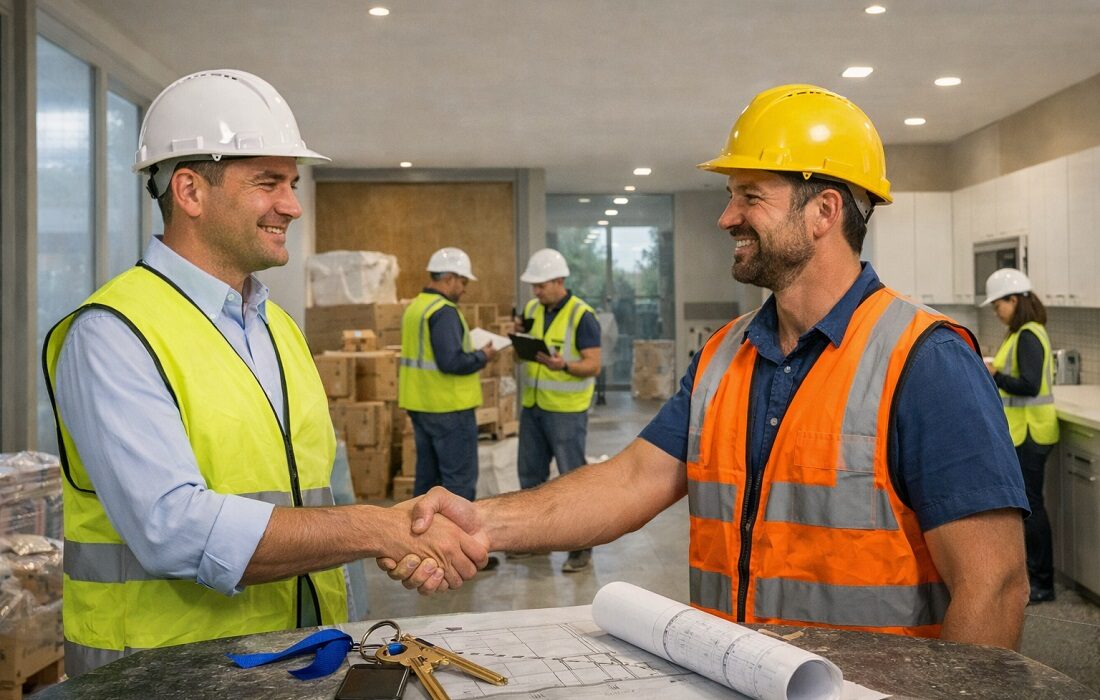
Practical completion is the stage of a building project where the work is finished, and the building is ready to be used for its intended purpose, even if a few minor items still need to be completed or corrected.
For clients, this is a very important milestone because it usually marks the point where:
- the builder says the project is ready for handover,
- final inspections take place,
- any minor defects or incomplete items are noted, and
- the final payment stage is close.
Practical completion does not always mean every detail is perfect or finished. It means the project is complete enough that you can reasonably occupy it or use it, with only minor outstanding items left to address.
The building should be functional, safe, and largely complete. Doors, windows, services, fixtures, finishes, and key construction elements should be working as intended.
What should not happen is a builder calling practical completion too early while major works are still unfinished.
Practical completion does not mean “perfect”
This is one of the biggest misunderstandings clients have. Practical completion is not the same as saying there is absolutely nothing left to do. It means building progress has reached a stage where the remaining items are minor and do not prevent normal use of the building.
For example, a missing doorstop, or a wall that was painted in the wrong color, may still allow practical completion. But unfinished wet areas, non-functioning plumbing, incomplete electrical works, would be a totally different story.
Why practical completion matters
Practical completion is more than the time when the client can start moving in. It’s a contractual and financial milestone as well. It’s also when:
- the final payment becomes due
- defect liability or maintenance periods begin
- insurances, responsibilities, or risk may begin to shift depending on the contract
- the builder’s formal construction period may be considered complete
What happens at practical completion?
On most projects, the builder will notify the client that the works have reached practical completion. A final inspection is then carried out so the client can review the project and identify any minor defects or incomplete items.
This stage often includes:
- a handover inspection
- preparation of a defects list
- confirmation of any final certifications or approvals required
- discussion of final payment and handover documentation
- arrangements for keys, manuals, warranties, and operating instructions where relevant
For residential clients, this is usually one of the most exciting stages of the building while being a stage where attention to detail matters.
What clients should check before practical completion is accepted
You don’t need to inspect the project like a builder, but you should take your time and review it carefully. Look at finishes, fixtures, fittings, doors, windows, paintwork, cabinetry, lighting, plumbing fittings, and external works. Open and close things. Turn things on. Check that items included in your contract are actually there.
If something seems significant, it should be raised before finalizing the handover.
It also helps to make sure you understand:
- what items are still outstanding,
- whether they are truly minor,
- when they will be fixed,
- and what documents you will receive at handover.
Residential vs commercial projects
Commercial projects can involve more formal procedures, certifications, and signoffs before practical completion is reached. There may also be more detailed testing requirements, especially where services, access systems, or fire systems are involved.
For homeowners, the process is usually easier, but the same principle applies. The building should be ready to live in, with only minor items left to fix, if at all.
Practical completion vs final completion
Practical completion is not always the very end of the contract. After handover, there is often a maintenance period during which the builder returns to address defects.
The final completion period happens later, once defects have been fixed, and all contractual obligations are fully complete.
Conclusion
Whether you are looking for a commercial or residential home builder, IQ Construction is the builder for you, with a proven track record across the greater Perth area! Want to find out more about our building process and what we can offer you?
Contact us today: (08) 9399 6715