
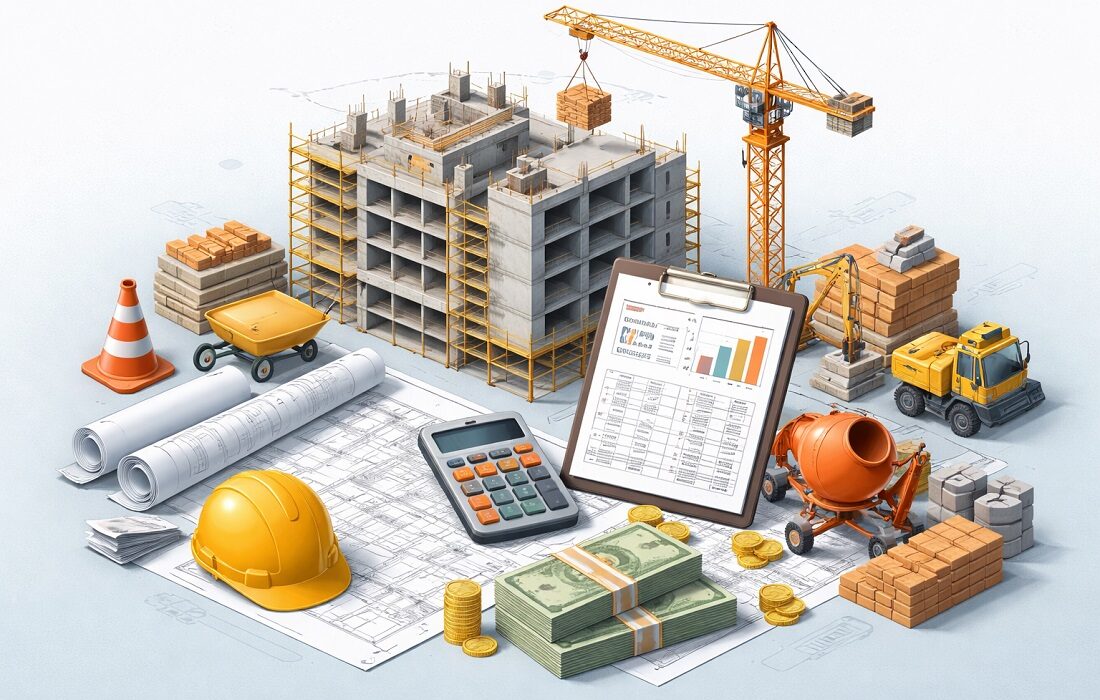
Cost plus is a construction pricing model where the owner pays the actual cost of delivering the project, plus an agreed builder’s fee or margin. Instead of agreeing on a fixed price at the start, the final contract value depends on what the work costs as the project progresses.
The “cost” part usually includes items such as labour, materials, subcontractors, and any other project expenses. The “plus” is the builder’s margin or management fee, which covers overhead and profit.
How cost plus works
Under a “cost plus” contract, the builder tracks the exact project costs and charges the costs to the owner, together with the agreed fee arrangement. That fee might be a percentage of cost, a fixed management fee, or a combination of both.
This structure is different from a lump sum contract, where the builder agrees to complete the project for a fixed amount, subject to any variations. With cost plus, there is less upfront price certainty, but more flexibility during design and construction.
Before choosing this pricing model, it is worth reading more about cost plus contracts so you understand how flexibility, reporting and cost certainty work in practice
When cost plus is used
This pricing structure is often used where the scope is not fully resolved when construction starts, where flexibility is important to the client. Examples include:
- renovations and extensions where hidden conditions may be uncovered
- custom homes with evolving selections or design changes
- complex commercial projects where final scope details are still developing
Why some projects use cost plus
The main advantage of cost plus is that it allows construction to move ahead without waiting for every minor detail to be finalised. It can also be useful when there is a genuine need for transparency around actual project costs rather than broad assumptions built into a fixed price.
In some cases, it can lead to a fairer outcome where the builder is not forced to price large contingencies into the contract to cover unknown risks. Instead, the actual costs are paid as they arise.
The main risk to understand
The biggest issue with cost plus is simple: the final price is not fully known at the start. If the job becomes more expensive than expected, the owner carries that risk and pays the increased cost.
That is why documentation, reporting, and approvals matter. A good “cost plus” arrangement should clearly set out:
- what costs can be charged to the project
- how the builder’s margin is calculated
- how often cost reports are provided
- how changes or major purchases are approved
Without good systems, cost plus can become difficult to track.
Cost plus vs fixed price
A fixed price contract gives more upfront certainty. Cost plus gives more flexibility, but with a higher risk to cost changes such as the recent increase in fuel costs due to the war in Iran.
Neither option is automatically better and mostly depends on the project, the level of design detail required, and how much pricing certainty is needed before construction starts.
Conclusion
Cost plus can work well on the right project, especially where scope is still developing, and there are a lot of choices left to be made. The key is understanding that you are paying actual project cost plus the builder’s fee.
If you’re planning a build in Perth, IQ Construction can help you make the right decision while understanding whether a cost plus or fixed price approach is better suited to your project. All while taking into account your budget, the level of flexibility you need during construction, complexity, timelines, approvals and more.
Our team is dedicated to building custom homes and commercial properties on time and within budget! Reach out to us today, by calling (08) 9399 6715.