
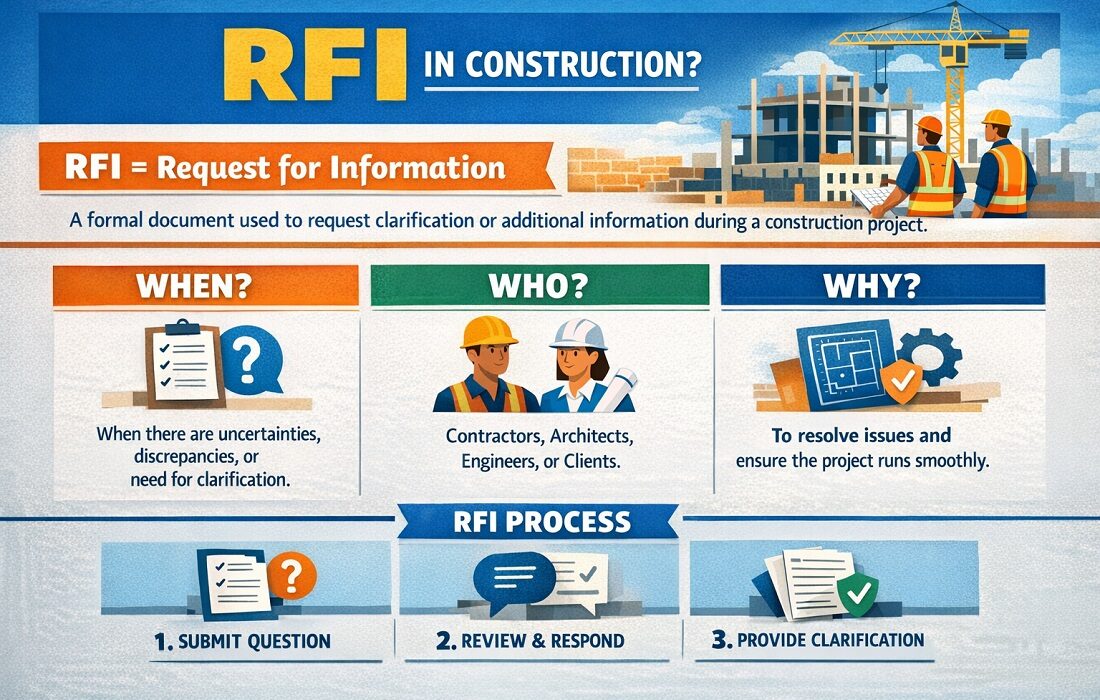
In construction, RFI stands for Request for Information. It is a formal request for information during a project when something in the drawings, specifications, scope, or site conditions is unclear and needs to be confirmed before work can proceed.
Why RFIs are used
Construction projects move through many trades, consultants, and documents. Sometimes the information available on site is incomplete, inconsistent, or open to more than one interpretation. An RFI is the process used to clarify that issue in writing. Without that clarification, the risk of mistakes, delays, or rework increases.
For example, an RFI might be raised if:
- a drawing detail conflicts with another drawing
- a finish or fixture has not been clearly specified
- dimensions are missing
- a site condition differs from what was expected
- the builder needs clarification before ordering materials or proceeding with work
Why it matters to a client
From the client’s point of view, an RFI is usually a good sign, not a problem. It means the builder or project team is identifying uncertainty early and asking for clarification before proceeding with the work. This process is critical to avoiding costly mistakes.
A good RFI process will help keep communication clear and reduce avoidable mistakes. That matters because unresolved questions can lead to:
That written process also connects to broader contract administration and claims avoidance, where clear records help reduce confusion around scope, cost and responsibility.
- incorrect work on site
- delays while decisions are made late
- extra costs if materials are ordered incorrectly
- disputes about what was intended
Will the client see RFIs?
On many commercial projects, RFIs are a normal and visible part of the contract administration process. They may be reviewed by the superintendent, architect, engineer, project manager, or owner’s representative.
On residential projects, homeowners may never see formal RFI documents, but the process still happens in the backend. A builder may raise questions internally with designers, engineers, or suppliers or relevant departments to confirm details before continuing.
In a more formal residential build, some of those questions may also be put into writing and referred to the owner where selections or decisions are required. Even if you never receive an RFI yourself, it is still part of how a construction project is kept accurate and moving forward.
A practical example
A good example is one where the architectural drawings show one window size, but the engineering schedule suggests something different. Rather than assuming which one is correct, the builder raises an RFI so the design team can confirm the correct detail before fabrication or installation starts.
That small step can prevent delay, wasted materials, and expensive changes later.
Conclusion
An RFI is a formal way of asking the right question at the right time. It helps the construction team avoid assumptions, document clarifications properly, and keep the project moving without mistakes.
At IQ Construction, we follow clear communication procedures during construction as a key part of controlling quality, timing, and cost. If you’re planning a residential or commercial project in Perth and want to gain a greater understanding of the process we follow, be sure to reach out and book a free consultation with us.
Call us today to book your consultation: (08) 9399 6715.