
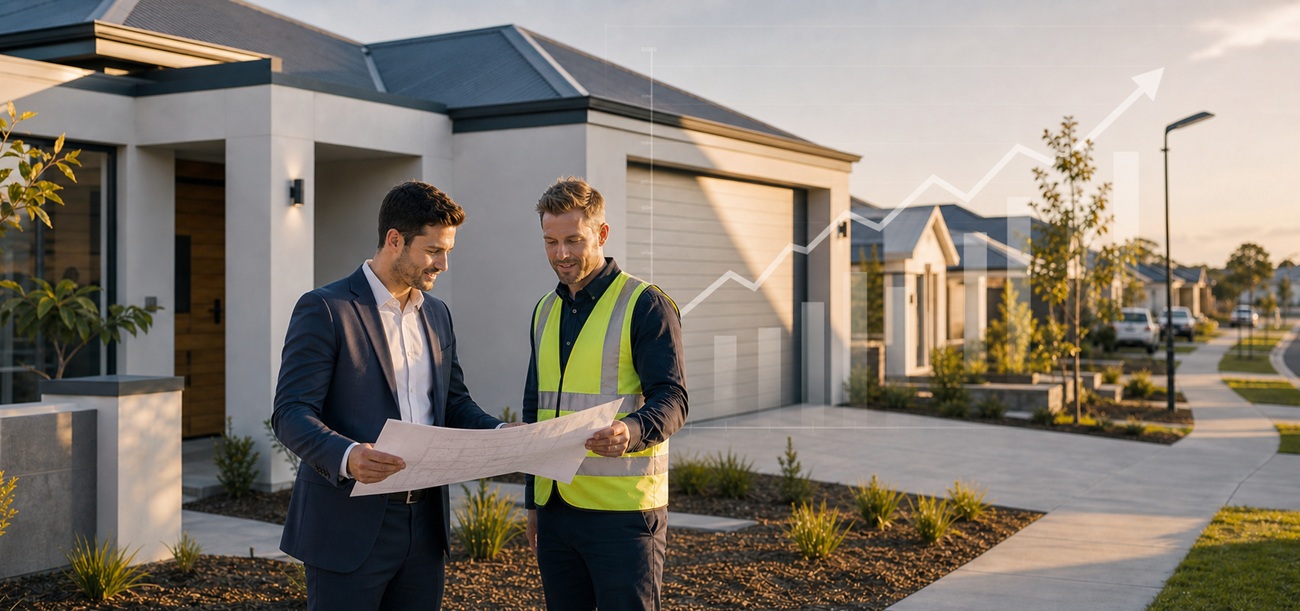
Building a rental property in Perth can create a newer, lower-maintenance asset, but it also involves a longer timeline, more delivery risk, and a delayed path to rental income. For some investors, that trade-off makes sense. For others, buying an established property will be the more practical option.
The decision usually comes down to whether the long-term benefits of a new build outweigh the added time, cost complexity, and project risk.
It is also important to remember that this is a general overview, not financial, tax, or investment advice. Let’s take a closer look.
One of the biggest advantages is starting with a new asset
A newly built rental property offers a clean starting point. Instead of buying an older home and then dealing with repairs, replacements, or immediate upgrades, you begin with a property where everything is new. The low maintenance profile makes building a rental property very appealing for investors.
This results in:
- less short-term maintenance
- fewer immediate repair surprises
- newer services and fixtures
- a home that is easier to present to tenants from day one
You have more control over what the property becomes
Another major advantage of building is control. With an established property, you inherit the floorplan, orientation, room sizes, and design compromises that already exist. With a new build, you can shape the home around the type of tenants you want the property to appeal to.
That might mean:
- more practical living spaces
- better layouts
- greater storage capacity
- low-maintenance finishes
- or a design that is simple, durable, and broadly appealing
Investment homes do not need to be highly customised to work well. In many cases, the strongest rental homes are the ones that are efficient, easy to maintain, and suited to long-term occupancy rather than short-term visual trends.
New homes can be easier to position in the rental market
Renters often look for modern kitchens and bathrooms, good natural light, efficient heating, cooling, contemporary finishes, and an overall sense that the home is fresh and functional.
That can make a newer home easier to position against older rental stock, especially where established homes may need cosmetic work or have fewer practical layouts. A newer property may also remain appealing for longer before it needs significant updating.
A new build can be planned with durability in mind
This is one benefit that is easy to overlook. A rental property should not just look good at handover. It should also be able to cope with repeated occupancy over time. Building from scratch allows investors to think more carefully about which finishes, fittings, and layout decisions are likely to hold up better under long-term use.
That can include choosing materials that are easier to maintain, planning storage more effectively, and avoiding design decisions that may look attractive at first but become expensive to repair or replace later.
The biggest downside is time
The clearest disadvantage of building a rental property is that it takes time. An established property can usually be rented soon after settlement. A new build must progress through land purchase, design, approvals, and construction before it can generate income. During that period, holding costs may continue even though the asset is not yet producing rent.
For some investors, that delay is manageable and worthwhile. For others, it is one of the main reasons buildings does not suit their strategy.
There are more moving parts than with buying established
Building a rental property involves a different level of coordination than buying an existing home.
A new build can involve:
- land selection
- site conditions
- design decisions
- documentation
- approvals
- build contracts
- construction timing
Costs are not always as simple as they first appear
People sometimes compare the purchase price of an established home with the advertised cost of a new build and assume one option is clearly better value. The comparison is usually more complex.
A new build may involve:
- site costs
- upgrade selections
- landscaping
- fencing
- driveways
- service connections
- and holding costs during construction
An established property may avoid some of those upfront items, but it may also come with maintenance issues, renovation pressure, or less efficient design. That is why the better comparison is not simply “Which one costs less to acquire?” It is also:
- what condition is the property in once it is ready to lease?
- how much additional money is likely to be needed?
- and how much maintenance pressure is likely over the first few years?
This is where choosing the right builder matters. IQ Construction can help investors clarify the project scope, specifications, likely costs, and construction pathway early in the process, reducing the risk of avoidable surprises later.
Market timing can change while the home is being built
When you buy an established property, you are deciding based on a completed asset in the current market. When you build, there is a gap between committing to the project and having a finished rental property ready to lease.
During that time:
- rental conditions may shift
- construction costs may change
- lending conditions may change
- and the local area may evolve between land purchase and completion
Tax and depreciation may also differ
A new rental property may have advantages from a depreciation point of view compared with an older property, particularly where fixtures, fittings, and eligible building components are all new. That can be relevant to some investors when comparing a new build with an established home.
Before deciding, compare the project properly
A meaningful comparison between building and buying established should look beyond the headline numbers. This gives a more realistic picture of whether the benefits of building justify the slower path to income and the added delivery complexity.
- the total project or acquisition cost
- the likely completion or settlement date
- the expected rental income once ready
- holding costs during the lead-up period
- likely ongoing maintenance
- and the level of risk or uncertainty involved in each option
Conclusion
Building a rental property in Perth can offer real advantages, including a newer asset, lower early maintenance, and more control over the final design. In return, investors need to accept a longer path to rental income, more project complexity, and greater exposure to changing costs and market conditions while the build is underway.
At IQ Construction, we help investors plan rental-focused homes that are practical, durable, and suited to long-term ownership. If you are considering a new rental build, we can review the block, discuss a suitable design approach, and help clarify the construction pathway before you commit.