building materials on rise small
CategoriesSummary

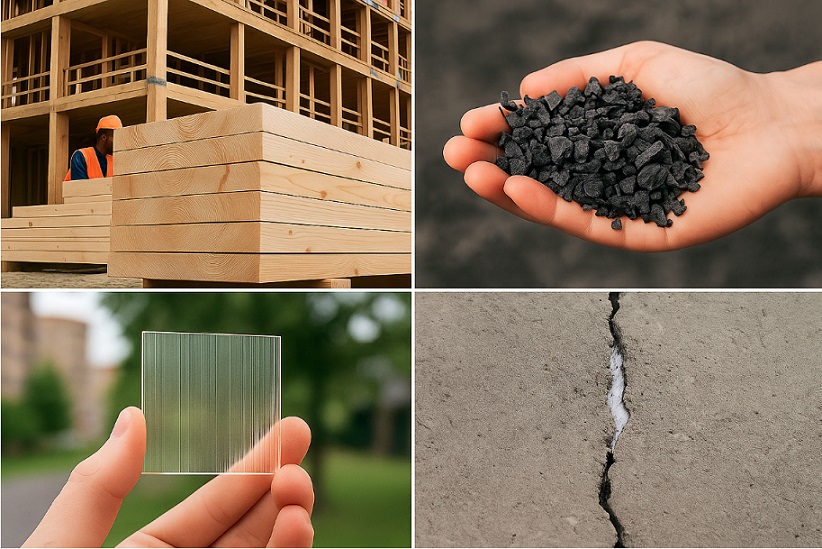
Five building materials on the rise

The construction industry is always changing Over the last decade, there has been a strong push toward sustainably sourced, energy-efficient, and cost-effective materials. In this article we’ll take a closer look at recently developed materials that have gained much popularity in the industry and show some example projects where they were implemented. 

Read more “Five building materials on the rise”

building material recycling
CategoriesSummary

The challenge of recycling more buildings

Construction and demolition waste, known as CDW, is a big issue world wide. In the United States alone the construction industry generates over 600 million tons of CDW every year. More than a third of all material found in landfills consists of construction and demolition waste associated with building projects 

Did you know that over 35 billion tons of materials are extracted from our planet in order to build all the different buildings each year? 

Read more “The challenge of recycling more buildings”

epoxy flooring
CategoriesSummary

What is Epoxy Flooring?

Epoxy flooring has long been used for commercial buildings and industrial sites. More recently home owners have started using it on garage flooring. The choice of colors as well as combination of design and additions are nearly endless – leaving lots of room for creative design. In this article we’ll take a closer look at epoxy flooring and help you find out if it’s the right choice for your home. 

Read more “What is Epoxy Flooring?”

multi-generational homes for australia
CategoriesSummary

How Australians are embracing multi-generational living

More Australians are looking to bring families together with multi-generational homes. There are many benefits to this approach such as offering support to family members, saving on living expenses and spending more time together. In this article we’ll take a closer look at why multi-generational home are on the rise.

Why people choose to live this way

There are many different scenarios where multi-generational homes make sense. It could be grandparents moving back in with their children. Many can’t bare the thought of sending their parents to an old age home, and it costs a lot of money. The care is often not as personal as they could receive from a family member. Having their elderly parents around not only means they can support them in their old age, but also, they can be part of their family life. Grandparents can help look after their grandchildren again helping save on childcare costs.

It can be that young adults choose not to move out of the house. Rent prices have dramatically increased in Western Australia, as well as housing costs, making it unaffordable for many to live on their own, let alone own a house. Some young adults would rather live at their parents’ house and save money to buy a home at a later stage, but it’s not without challenges.

What a multi-generational home should look like

Research suggests having a home built for multi-generational living could increase its value by up to 20% and could increase rental income. For investors or those looking for a long-term return on their housing investment, this is great news. For those living together, it might not be so easy. Most deem privacy a big issue. They look for a home either with multiple levels such as a ground floor with a separate living space and bathroom or a big enough home separated into multiple living areas.

If teenagers or young adults are involved, chances are they would like their own space. All this can add to the complication of such a living arrangement. Alternatively, a granny flat or extension could be added to the home to cater for additional family members.

In conclusion

Multi-generational living isn’t going away soon. Many options exit to make this type of living arrangement work. However, when considering this move, it’s best to have a living arrangement that provides enough privacy and accommodates everyone’s needs.

At IQ Construction we can create a tailored home design that meets all your family needs. Whether it’s an extension, renovation, or a completely new build, let our team of building specialists design and build the perfect home for you!

Contact IQ Construction for more information today!

CategoriesSummary

Accommodating Perth’s urban sprawl

Urban sprawl refers to the expansion of a city into surrounding rural or undeveloped land, often with heavy reliance on transportation, large housing areas, and city infrastructure stretching long distances. In Perth’s case, the city limits have been expanding across greenfield sites along coastal plains and into outer suburban districts, where services and utilities must cover greater distances.

Read more “Accommodating Perth’s urban sprawl”

solar roof tile installation
CategoriesSummary

What are solar roof tiles?

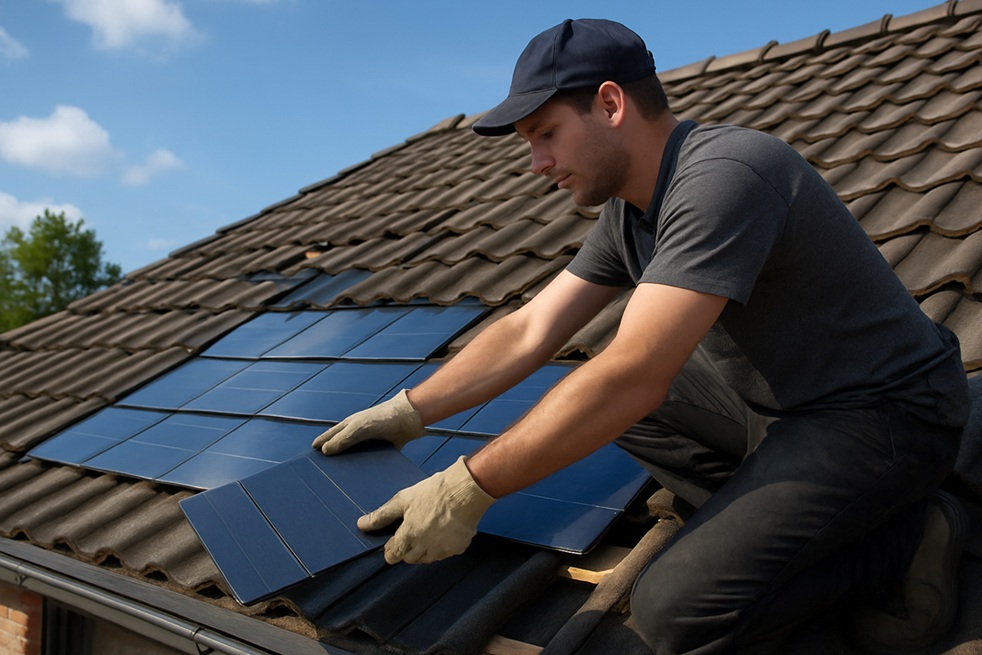
Solar roof tiles are seen as an innovative alternative to traditional solar panels. With traditional solar panels, you mount large panels on top of an existing roof structure, no matter the type of roof.  

Solar tiles integrate solar cells directly into the roof’s surface. The concept first gained traction over a decade ago with Tesla and others pioneering commercial products. Since then, the market has been refined, improving the technology and solar panel efficiency. 

One breakthrough came from Western Sydney University, where engineers developed tiles by embedding solar cells on the tile surface using a customized adhesive. Early testing showed promising results. With specific conditions, they produced roughly 19% more electricity than standard solar panels. Their design slows how quickly the tile heats under the sun, helping the cells stay cooler and operate more efficiently. 

Comparing solar panels to solar roof tiles in cost 

Cost remains one of the biggest challenges with regards to solar roof tiles. Currently, solar roof tiles can cost as much as $600 per square meter including installation and an inverter. This is a much higher cost than traditional rooftop solar panels. Keep in mind costs can vary, but in general it remains an issue.  

Researchers at Western Sydney University are working to reduce this figure to $250/m² which would make solar roof tiles much more competitive, widening the potential market reach. 

In terms of efficiency, most solar tiles fall within the 10–20% efficiency range like most basic solar roof panels. The difference seemed to be that when exposed to maintained sunshine, the tile would heat up more slowly due their thermal management advantage and operate at peak efficiency for longer periods. 

How durable are solar roof tiles really? 

Durability remains a main concern for any solar panel device. Usually there are big upfront costs for solar panels, meaning it only becomes feasible after a few years. The last thing you want is to replace solar panels often, whether tile or traditional. 

Solar tiles have an expected lifetime of up to 25 years or more. However, since is still a relatively new product, more testing is needed. Life-cycle studies are being carried out to assess energy production and whether tiles might affect internal building temperatures. This could in return result in a greater need for air conditioning and negate much of the benefits of using solar panels in the first place, especially in Western Australia. 

The university prototypes were made by modifying existing tile manufacturing machines and by using a custom adhesive to bond cells securely. Scaling up production could be feasible without a complete overhaul of manufacturing infrastructure which is promising. It is still somewhat uncertain whether these roof tiles can withstand harsh Australian conditions like extreme heat, hail, and high winds. 

Pros and cons 

Here is a brief overview of the pros and cons of solar roof tiles. 

Pros

  • Seamless design that blends with your roof. 
  • Can replace traditional roof tiles, saving space. 
  • Potential to perform better than panels in high-heat environments. 

Cons

  • Current cost is significantly higher than traditional panels. 
  • Technology is still emerging, with limited large-scale testing. 
  • May affect internal building temperature in unexpected ways. 
  • Repairs can be more complicated, as individual tiles are integrated into the roof. 

The Bottom line

Solar roof tiles is an exciting step forward in renewable energy and can even have an influence on architectural design. They can make your home look aesthetically pleasing, while offering some benefits but the high upfront costs do little to convince homeowners of installation, which means wide option is scarce. 

At IQ Construction, we know that choosing the right energy solution comes down to balancing cost, durability, and performance. Our team can help you design a home that does not only look good, but is energy efficient as well, no matter your budget.  

Contact IQ Construction for all your custom and commercial construction needs today! 

© 2022 – IQ Construction. All rights reserved.